The next lecture in UNBC’s “Anthropology in our Backyards” series is a
presentation on the cultural significance of food to explore the
relationship between food and identity.
Bannock,
Borscht and Sushi: Do These Genes Make Me Look White? will be presented
by Dr. Marilyn Iwama to look at the ways in which deciding what goes on
the dinner table is being used to define Canadians. She will also be
looking at food as a cultural flash point and stabilizer.
The public is welcome to attend the talk at ArtSpace (above Books and Co.) at 7 p.m. January 12.
“In
the Canada of 2010, grocery chains stock kim chee and naan next to the
perogies and chorizo. “We also attend boundary-blurring festivals, such
as Gung Haggis Fat Choy Day,” says Iwama, who has a PhD in
Interdisciplinary Studies.
“Claiming and recognizing ‘our’ food is
becoming harder and harder. What havoc have immigration, intermarriage
and intercultural adoption wreaked in the kitchen – and does it matter?”
“In
an increasingly diverse society with families piecing together various
culinary and cultural traditions, deciding what will be served has
become increasingly daunting,” said Iwama.
“I suggest that Canadians are not only dining out on our changing society, but also counting on food to define it.”
The
talk is being sponsored by the UNBC Anthropology program in partnership
with Books and Co. with the aim of bringing together researchers and
the general public in exploring issues relevant to northern British
Columbia.
Iwama was born in Nipawin, Sask. of Cree, Saulteaux, Mtis
and Mennonite descent. She has focused her academic interests on the
transformation of culture and the interweaving of indigenous and
Western knowledge. Marilyn and husband, George, who is of Okinawan and
Japanese descent, have three sons.
–btrick@pgcitizen.ca
See full article at
http://www.princegeorgecitizen.com/20100107999924452/local/news/what-39s-food-got-to-do-with-it.html


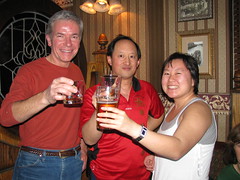 Allan McMordie, Todd Wong and Debbie Poon, give a toast on kilts night.
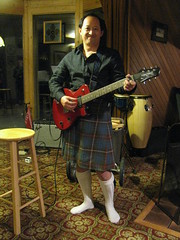
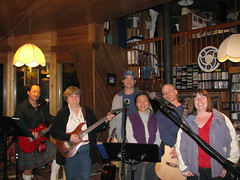 Carol and Jeff's music house, with special guests Todd and Deb.
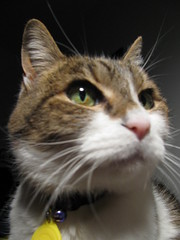 Rest in Peace – June 1993 – January 6, 2010.
 Psyche sneezes and shakes her head.

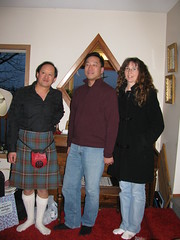 Todd Wong, Dan Huang and Dan's wife Allison who plays bagpipes!