Author Archives: Todd

SAVE KOGAWA HOUSE Celebration and Awareness Concert Nov 12


November 7th, 2005


SAVE KOGAWA HOUSE Celebration and Awareness Concert


NAOMI’S ROAD opera performance By Vancouver Opera Touring Ensemble

Special guest, Musician Harry Aoki and friends

Saturday November 12, 2005 2:00pm

Vancouver Public Library

350 West Georgia Street

Alice Mackay Room

Admission is free, all are welcome.

This past week, a cherry tree graft from Kogawa House was planted at
City Hall on November 1st, which was proclaimed Obasan Cherry Tree Day.
On Thursday, November 3rd, the Vancouver City Council’s Planning &
Environment Committee voted unanimously to pass an unprecedented
120-day demolition delay order for Joy Kogawa's childhood home to allow
the raising of funds so that the house can be purchased and converted
into a writers' centre.

To celebrate these milestones in the Save Kogawa House campaign, a
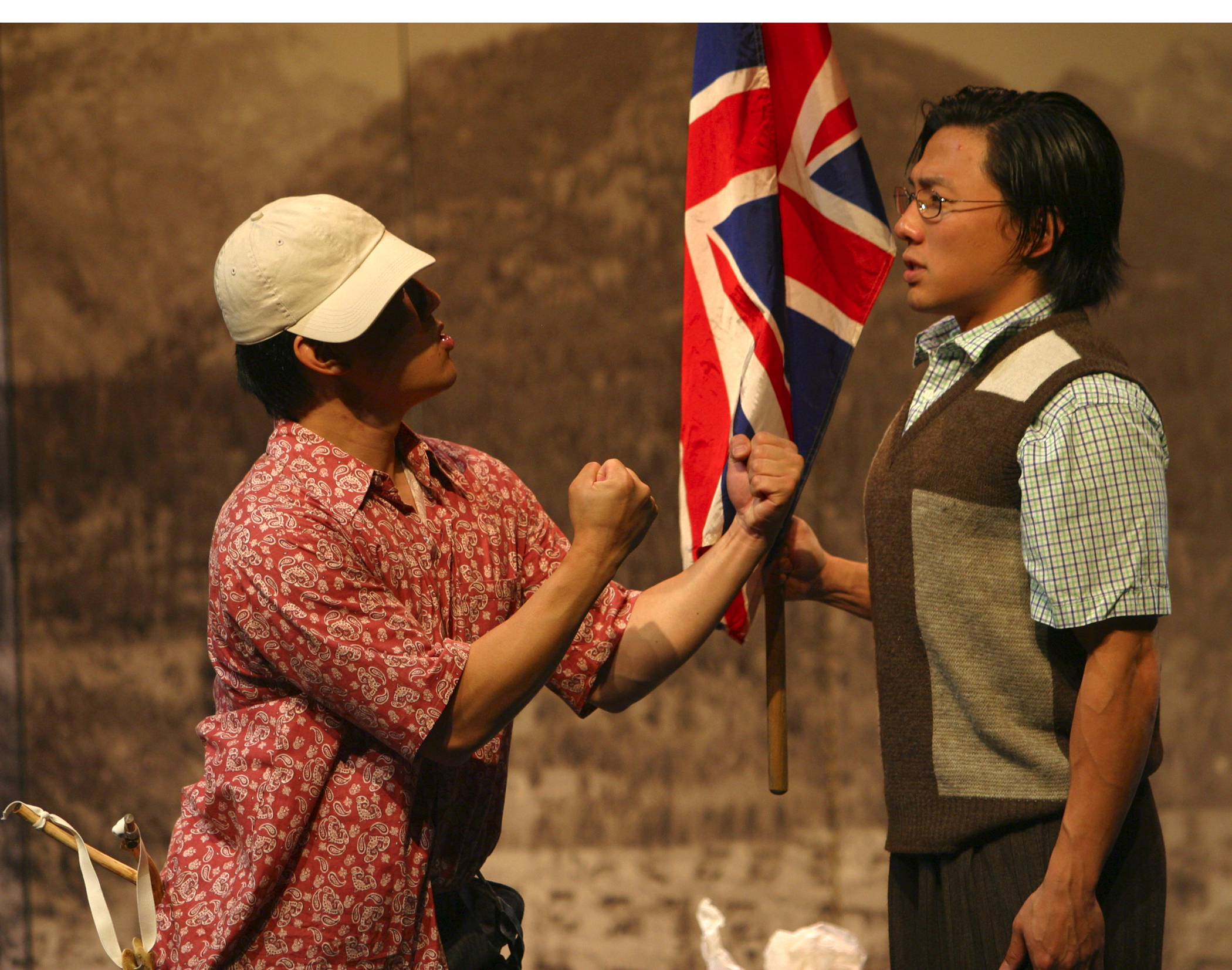
performance of the opera Naomi’s Road by the Vancouver Opera Touring
Ensemble
will be presented free to the public on November 12 at 2:00
pm. It will take place in the Alice MacKay Room of the Vancouver Public
Library downtown.

The Marpole home is featured in Joy's award-winning novel Obasan and
the children’s story Naomi's Road, which premiered on September 30 as
Vancouver Opera's second-ever commissioned original work and is now
touring to 140 schools and community centers throughout B.C.

Special guest musician is Harry Aoki. His personal story mirrors that
of the role of 10 year old Steven in the Naomi’s Road Opera. Harry had
to leave behind his beloved violin, when he was forced to leave the
West Coast because he was Japanese Canadian.

For further information contact Todd Wong at gunghaggis@yahoo.ca
Phone: 604-240-7090

More information at www.kogawahouse.com, www.kogawa.homestead.com and www.gunghaggisfatchoy.com

This event is sponsored by Vancouver Public Library, Vancouver Opera,
ExplorASIAN, Asian Canadian Writers’ Workshop and Ricepaper Magazine.

Coalition marks 120th anniversary of completion of Canada's first transcontinental railway


Media   Advisory: November 7, 2005


Coalition marks 120th anniversary of completion of Canada's first transcontinental railway

TORONTO. The   Ontario Coalition of Chinese Head Tax Payers
and Families (Ontario Coalition)   will host a commemoration
of the 120th anniversary of the completion of the   Canadian
Pacific Railway at 12:30 pm EST today at the Monument to the Chinese
Railroad Workers in Canada in Toronto.

“November 7, 2005 is a significant date in the history of Canada,” Doug
Hum, Co-Vice Chair of the Ontario Coalition said today, “It’s the 120th
anniversary   of the driving of the last spike in 1885 on
November 7th at Craigellachie, British Columbia which completed the
final railway link that joined Canada from the Atlantic to the Pacific
Oceans.”

At this event, the   Chinese Canadian National Council (CCNC)
will present the “Last Spike”, a “commemorative iron spike” received
from celebrated Canadian historian and author Pierre Berton before his
passing.  

Through this precious gift to   the CCNC, Mr. Berton
recognized the early Chinese contribution to the building  
of Canada. “We are pleased to have the support of the Teamsters Canada
Rail Conference,” Victor Wong, Executive Director of CCNC said today.
“The union shares a common history with
the Chinese men who helped Canada achieve its National Dream – a
railway linking the country from the Atlantic to the  
Pacific.”

To complete this final   link, the Government of Canada had to
recruit thousands of Chinese workers   mostly from Guangdong,
China when almost no one else could be found or were willing to do the
work. There was tremendous opposition to Chinese workers in British
Columbia at the time which prompted the first Prime Minister of Canada,
Sir John A. McDonald who being fearful that the completion of the
railway might be jeopardized,
to lash out at opposition to Chinese workers saying that, “either you must have this labour or you can't have this railway.”

“Immediately following   the last spike in 1885, the
Government of Canada in pandering to racist elements at the time,
slapped a head tax on all Chinese immigrants to Canada,” said Susan
Eng, Co-Chair of the Coalition.  “It began initially at $50, then
was raised to $100 in 1900 and finally to $500 in 1903.”  This
“Chinese Head Tax” failed to deter Chinese immigration which led the
Canadian Government to finally close the door on almost all Chinese
immigration by enacting the “Chinese Exclusion Act” in 1923 which was
not repealed until 1947.

To mark November 7th,   the Ontario Coalition of Chinese Head
Tax Payers and Families is hosting a   commemoration of
Chinese railroad workers in Canada and a press conference
to   outline its plans for redress of the Head Tax and
Chinese Exclusion Act.  In attendance will be direct descendents
of the builders of the railway that helped to build Canada.

The Ontario Coalition   of Chinese Head Tax Payers and
Families consists of head tax payers, their   surviving
spouses and descendants.  They are joined in the campaign
for   Head Tax redress by the Chinese Canadian National
Council, the Association of Chinese Canadians for Equality and
Solidarity Society, Metro Toronto Chinese   and South East
Asian Legal
Clinic, BC Coalition of Head Tax Payers Spouses and   Descendants, and other equality-seeking groups.

DATE:            Monday, November 7, 2005
TIME:             12:30 p.m. EST*
LOCATION:  The Monument to the Chinese Railroad
Workers in Canada at Blue Jays Way and Navy Wharf Ct. west of the dome stadium (Rogers Centre)

*The last spike was driven at 9:30 a.m. PST.

 -30-

For further   information and to arrange interviews, please contact:

Doug Hum, Chinese Head   Tax Payers and Families, Toronto, (416) 706-7886

Victor Wong, Chinese   Canadian National Council, Toronto, (416) 977-9871

Sid Tan, BC Coalition of Head Tax Payers Spouses and Descendants, Vancouver, (604)   433-6169

The Age of Opulence: Turning Point Ensemble + Heritage Vancouver create a musical afternoon of tea and heritage

The Age of Opulence: Turning Point Ensemble + Heritage Vancouver create a musical afternoon of tea and heritage

Turning Point Ensemble
Heritage Vancouver

Sunday, November 6th, 2005
The Age of Opulence, Vancouver 1915-1930
Stanley Park Walking Tour, & Vancouver Historic Music w/ the Turning Point Ensemble
Location: Stanley Park Pavillion, The Rose Garden Tea Room
Time: 2pm to 4:30pm
Admission: By donation
2pm Walking tour with Heritage Vancouver President, Donald Luxton
3pm – 4:30pm Parlour performance by the Turning Point Ensemble

The idea was to “Take a journey back to Vancouver's age of opulence with Heritage
Vancouver and the Turning Point Ensemble. Imagine… the date is 1915,
the Stanley Park Pavilion is newly built, and you are joining us for
tea and an afternoon performance of music and song in the Stanley Park
Pavilion Rose Garden Tea Room.


“Meet at the tea room for a walking tour of the pavilion and Malkin
Bowl, then relax to music featuring premiere arrangements of early BC
parlour songs and concert music composed by Vancouver's first
internationally trained composer, Jean Coulthard. Woven together with a
sparkling narrative, the concert will include music by Ravel,
Rachmaninoff, and Jelly Roll Morton – all featured guests in Vancouver
in the 1920's.”

So many people showed up for the tour that the guide kept saying “I
can't believe so many people showed up!”  Meanwhile inside the Stanley Park Pavillion, at the Rose Garden Tea Room,
the kitchen rushed to make up more sandwiches and the staff set up more
seats creating a new row, so that the reserved seats formerly in the
front row were now in the second row.

Guest performers Heather Pawsey and trumpeter/pianist Alan Matheson were all dressed in time period perfect costumes with the Turning Point Ensemble
Pawsey opened the show with “Here's a Ho, Vancouver” credited to B.C.
Hilliam and E. Pauline Johnson.  Her heel coquettishly raised,
Heather flirted with the audience and bequiled them to enjoy
themselves.  Her operatic soprano was perfect for the palour songs
presented from 1915 to 1930. 

Throughout the performance the Turning Point ensemble took turns
performing popular and classical arrangments in duos, trios and larger
ensembles.  Rachmaninov's Vocalise was performed by Ariel Barnes
on Cello and Jane Hayes on piano.  Narrator Alexander Browne spoke
into an old microphone that perfectly duplicated the old microphone
radio sound of the 1920's.  Looking around the Heritage Class “A”
building of the Rose Garden Tea House,
you could actually imagine that this was how high society used to enjoy
music in the afternoon salons of Vancouver.  Organizer Lindsay
McDonald and photographer Lindsey Donovan were both dressed up in period dresses, helping to create an atmosphere of glamour and fun.

The Turning Point Ensemble's mission is to increase the understanding
and appreciation of concert music composed during the past hundred
years, linking the music of earlier times to the music of today. 
I particularly enjoyed the three songs by Vancouver born, Jean
Coulthard, Spinning Song, Cradle Song and The of China's
Daughter.  Francis Poulenc's Sonata for Horn Trumpet, and Trombone
were beautiful, as Maurice Ravel's Chansons Madecasses were serious and
imposing.

The afternoon of team and salon music ended on very exhuberant notes,
as Pawsey and the full ensemble performed their encore numbers, S Nice
by William Eckstine and Sam Howard.  Again, Pawsey posed and
flirted with the audience proving what a dramatic performer she
is.  The audience was asked to join in for the “stuttering
song”K-K-K-Katy, and then the desserts came out.

Definitely a fun afternoon.  I will be that next year it will happen again, but maybe with advanced ticket sales.

Chinese Canadian History Fair in Nanaimo at Malispina College

Chinese Canadian History Fair in Nanaimo at Malaspina College

The Chinese Canadian Historical Society of BC
organized another history fair, this time at Nanaimo's Malaspina
University-College.   Nanaimo's Chinatown used to be a thriving bustling
place from 1860 to 1923.  My great-great-grandfather, Rev. Chan Yu
Tan, had ministered at the Chinese United Church around 1924.
After becoming increasingly derelict it was destroyed by a fire September 30, 1960.  CCHS board member Dr. Imogene Lim played a big part in
bringing many presenters together from Nanaimo, Cumberland, Vancouver
and Prince George. 

Here's what Imogene had to say about the event:


“Although we had a very wet and
stormy day, I think we can say the second CCHS Chinese Canadian History
Fair was a success; we drew a sizable crowd to all the featured
activities.  There was a lot of mingling and conversation between
visitors and between exhibitors; in many cases, a reunion and
reconnecting of intersecting lives.” 

Fourteen displays were presented including the Nanaimo
District Museum, Cumberland Historical Society, Chinese Women Aviators,
Trev Sue-A-Quan's Guyanese Chinese  genealogy titled “Cane Reapers,” Head Tax Redress, 1907
Riots, Chinese soccer team featuring Queene Yip, chinese cemetaries, and Chinese Canadian women pionneers.

Janice Wong presented her book CHOW From China to Canada:
Stories of Food and Family
.  This was followed by a panel
discussion with Dr. Imogene Lim, restauranteur Gerry Wong who along
with Janice all grew up in restaurant enviornments.  Gerry's
father had chinese restaurants in Nanaimo, while Imogene's uncle and
father ran
the WK Gardens in Vancouver, which she described as a “high end”
restaurant which had catered to Prime Ministers, royalty and
entertainers
such as Frank Sinatra and Gary Cooper.  Imogene even showed some of the
original menus and special event menus created for events such as
weddings and royal visits.

Karin Lee also showed her movie Comrade Dad, as well as having a
display table.  It was the Vancouver Island premiere of Comrade
Dad, a Karin Lee film about her father, Wally, who ran a Communist
bookstore in Vancouver's Chinatown in the days before China was
recognized by the Canadian government.
The NFB film featuring my cousin Rhonda Larrabee's story about growing
up half Chinese and half First Nations, Tribe of One, was also shown.

I set up a display of the Rev Chan Family, including the poster
displays that were made for our family reunions in 1999 and 2000. 
It was very cool that I had pictures of Janice Wong's parents, Dennis
and Mary, her grandparents Joseph and Rose, and her great grandfather,
the Rev. Chan Yu Tan with his wife Wong Shee, as Janice is my 2nd
cousin once removed.

Rhonda Larrabee is also a relative as her father Art is my
grandmother's elder brother, so we had pictures of Rhonda at the
reunions as well, with her brothers, daughters and grandchildren.

I had meant to phone my grand-aunt Helen who lives in Nanaimo, and
tried to reach her through Directory Assistance once I got there but to
no avail.  As I was setting up the display, I saw a white haired
woman approach the Rev. Chan Family display flanked by CCHS board
members Larry Wong and Edgar Wickberg. 

“That's my grandfather!” she exclaimed, “And my grandmother! How did you get these pictures!”

Both Larry and Ed looked over at me, as I stood silently behind my
Auntie Helen.  I held my finger to my lips asking them not to say
anything.

“That's his sister! How did you get these pictures!” my Aunt continued pointing at the pictures.

I finally spoke saying, “Please don't touch the pictures, they are very sensitive.”

“Sorry,” she said as she kept looking at the pictures saying, “That's my Aunt!  That's my Uncle!”

“Excuse me,” I said, “How are you related to these people in the pictures?”

She turned and looked at me.  Her eyes suddenly widened joyfully
in recognition.  “Todd!  What are you doing here?”

It turned out that Auntie Helen's friend had been listening to CBC
Radio's North By Northwest, and host Sheryl Mackay had talked about the
Chinese Canadian History Fair at Malispina College, and she told
herself that her friend Helen had to be there. 

“You look just like your sister!” Janice Wong exclaimed to Auntie
Helen, when I introduced them to each other for the very first time,
during the CHOW book signing, after the panel discussion with Janice,
Gerry and Imogene.  They had never met each other before, but they
knew they were family.


The Chinese Vote in Vancouver: NPA, Vision Vancouver or COPE?

The Chinese Vote in Vancouver: NPA, Vision Vancouver or COPE?

The Vancouver Sun has run an article titled Vision trying to
lure Chinese voters away from NPA
on today's page B5.  But the
article does not identify a distinction between Chinese immigrant
voters and the multigenerational Chinese Canadians born and raised in
Canada.

The reporter Frances Bula, had interviewed me on Friday afternoon asking me about
whether Vision Vancouver can capture some of the traditional Chinese
vote in Vancouver.  I immediately asked “Which Chinese community
vote are you talking about?”

“Raymond Louie, is the first Vancouver born City Councillor,” I told
Frances Bula, who was surprised at the fact. Bill Yee was the first
Chinese elected to council but he wasn't born in Vancouver. 
“Sandra Wilking was the first Chinese woman councillor but was born in
South Africa. Jenny Kwan was the first COPE councillor but was born in
Hong Kong.

“We have to go back to Douglas Jung in 1957″ to find a Chinese Canadian
politician born in Vancouver.”  Jung was Canada's first Member of
Parliament.  Even Art Lee, elected in the 1970's had come from
Alberta.

“We are what I call the 'invisible visible-minority',
multi-generational Canadian born chinese, who have integrated and
assimilated into the mainstream,” I told the reporter.

“How do I vote?  I vote according to the person, rather than
strictly along party lines.  It's important to have a healthy
opposition in government, or on civic council  That's why people
kept voting for Harry Rankin.

“I like Ellen Woodsworth of COPE, and Heather Deal of Vision Vancouver
I've gotten to know them since they were elected.  I know both Sam
Sullivan and Jim Green – Sam has supported our Asian Canadian Writers
Workshop dinners, and Jim has helped us with the Save Kogawa House
campaign.  Anne Roberts, Peter Ladner, along with Woodsworth and
Sullivan also attended my Gung Haggis Fat Choy dinner earlier this year. They are all wonderful human beings.”

“I first got to know Raymond Louie through his wife, when she was
on the Vancouver Asian Heritage Month Society.  Raymond, like all
my cousins on my mom's side – all married caucasians.” This surprised
the reporter.

Raymond wants to be more than just “the Chinese councillor” – more
importantly, he identifies himself as a Canadian who happens to be of
Chinese ethnicity, as I do.  I can actually say this about many
multi-generational ethnic Canadians, because we think Canadian
first!  And we are better able to cross ethnic lines this way, and
better able to understand all cultures.

Raymond's family has been in Vancouver for a long time.  We gave
shared stories about early Chinatown experiences.  George
Chow's grandfather paid the head tax, and he immigrated to Vancouver in
the 1960's.  Personally, I don't expect
the newer immigrant counsellor candidates to understand some of these
issues about head tax or the experiences of the pioneer chinese of the
1800's and early 1900's.  But I think Raymond and George
can.  They are also people I can relate to and trust. 
Then again, I can't expect myself to understand a lot of the immigrant
Chinese
issues.  But because I am more familiar with Chinese culture, and
work with and know a lot of immigrant Chinese, I am probably more
knowledgeable than somebody who is non-Chinese and hasn't experienced
similar issues.

Raymond I and were both at the opening of the 3 Chinese Canadian Pioneer Familes
exhibit at the Chinese Cultural Centre Museum and archives in
2002.  I am descended from Rev. Chan Yu Tan, and he is a distant
relative of H.Y. Louie, who were both featured along with Lee-Bick, the
ancestor of former UBC Counsellor and Vancouver businessman Bob Lee.

I think that it is a myth that the Chinese vote traditionally goes to
the NPA, and it may be simply that the NPA were better at recruiting
candidates such as Tung Chan, Don Lee, and Daniel Lee, who as native
Chinese speakers were better able to speak to Chinese media.  Even
the Chinese Canadian voters didn't fully support Douglas Jung in his
re-election bid, nor did Don Lee and Daniel Lee get re-elected in the
last civic election, even though Raymond Louie was elected.

I know that I have also had the pleasure to meet Alan Wong and John
Cheng, the COPE and NPA Vancouver School Board Trustees.  They are
also both wonderful men, but I relate a bit better to Alan maybe
because he grew up here in Canada, and we are closer in age.

I think that when people vote, they want the people who can best
represent their interests.  And this may also mean voting for
people that come from similar backgrounds, hence immigrants may be more
likely to vote for other immigrants of similar background.  But
they may also vote for people who are multigenerational, and represent
how their children will grow up as integrated Canadians and
Vancouverites.

I forgot to tell the reporter that I'll be attending the Libby Davies' COPE
chinese
dinner fundraiser on November 10th at the Rich Ocean Seafood Chinese
Restaurant on 777 West Broadway.  It's being organized by my
friend Meena Wong, who is helping COPE as a chinese voter
strategist.  And I may even be wearing my
kilt as a performer with my accordion.  How Chinese is that? 
Not very…. but very multicultural Vancouver!

Vancouver Asian Film Festival – Gala Opening + Motel + What Are You Anyway?

Vancouver Asian Film Festival + Gala Opening + Motel + What Are You Anyway?

There was a good fun crowd at Tinseltown for VAFF's
opening night. I immediately joined friends Elwin and Fanna, and while
standing in line to go in we said “Hi” to friends Jim Wong-Chu,
film-maker Poping Au, Kathy Leung, Tom Chin, Joyce Lam as well as VAFF
executive director Peter Leung and VAFF founder Barbara Lee.

This year's VAFF opening featured two films.  The award winning animated short What Are You Anyways? by Jeff Chiba Stearns,
and Motel by Michael Kang.  Both films were very enjoyable and
expressed aspects of Asian-ess that the audience could releate
to. 


What Are You Anyways? is a classic animated short that consisted of a
series of vignettes about growing up half-Japanese, or “Hapa” as the
main character describes the Hawaiian term for “Half-Asian.”  This
film is hilarious, as situations unfold such as dealing with
“red-necks”, dating Japanese girls, and falling in love.


Motel
, is a live drama about the awakening adolescence experienced by a
chubby 13-year old American Chinese youth named Ernest Chin (Jeffry
Chyau) whose family owns and runs a blue motel.  He has a crush on
an older teenage Chinese American waitress whose family owns and runs
the Chinese restaurant up the road.  Comic situations develop when
a charismatic Korean-American guy (Sung Kang, Better Luck Tomorrow)
checks into the motel becoming an older brother type mentor figure to
the fatherless Ernest.

The Motel was workshopped at the Sundance Filmmakers Lab and
ultimately received the Sundance/NHK International Filmmakers Award.
What Are You Anyways? won the Best Animation Award at the 2005 Los Angeles ARPA
International Film Festival

THE VAFF GALA
As always, the VAFF Gala is one of my favorite Asian Canadian Cultural
events.  It is a great place to see the movers and shakers in our
Asian Canadian literary and arts community.  I was greeted by
Charlie Cho (CBC Radio) and Prem Gill (City TV) with cheers for the
work I have been doing with the Save Kogawa House committee.  Prem
told me that City TV did a piece on Kogawa House that evening.

It was great to see Eunhee Cha, who made the NFB documentary Tribe of
One
last year about my cousin Rhonda Larrabee.  She passed out
postcards of her new film Blue Bird of Happiness telling me that I
would love her new film in which “A neighbourhood activist decides that
a 7-year-old asian girl being raised by white parents needs his help.”
Writer Liz Nonuda seems to have a great sense of humour.

Ray Shum, friend and photographer for our Asian Canadian arts
community, was taking lots of pictures for VAFF.  It was great to
introduce him to Jeff Chiba Stearns, who told him, “During the Q&A,
I noticed you were taking pictures and I was thinking – I want some of
those pictures!” 

Jeff was accompanied by his real-life girlfriend Jenni Kato. 
Joyce Lam, founder of Vancouver Asian Canadian Theatre, shared with
Jenni that when Jeff announced that the woman whom the character
“Jenny” was based on was taking pictures in the audience during the
Q&A, everybody was craning their necks to see her.  Jenni is a
stunningly attractive and immediately likable woman, and it is easy to
see how Jeff fell in love with her – just like in his movie!

Joyce's partner Tom Chin is always great to see.  I invited him to
again be a co-host for Gung Haggis Fat Choy: the dinner.  Tom told
Jeff and me that he has now redesigned his half Canadian lumberjack
shirt / half Chinese jacket outfit… it is now half hockey
jersey!  Can't wait to see it!  But is it the Canucks, Maple
Leafs or Canadiens?

It was nice to talk to Susan Gordon of Vancouver Parks, and Eric
Erickson if the NFB, whom I discovered was the executive director of
“Tribe of One.”

Don Montgomery, executive director of ExplorASIAN and  Iris Chen
sat with our ACWW / Ricepaper community with Marlene Gates, Grace Chin
(organizer of Scripting Aloud), and Ricepaper collective Michelle Siu,
Jenny and Carol.  It was great to invite them all to the Naomi's
Road performance at the Vancouver Public Library, and for the
organizations to come on board as sponsors for the event.

Raymond Liens, an ExplorASIAN board member was there with Richard
Teterault, whom I discovered was the News Producer for Radio Canada
Television, and had assigned the story to cover the Save Kogawa House
presentation at City Hall.  It's really a small world, but a great
community.

Kudos to VAFF founder Barbara Lee, executive director Peter Leung and
all the VAFF directors and volunteers.  This is definitely a good
contribution to our Asian Canadian arts community.

Check out the Ricepaper review of VAFF's opening night
http://www.ricepaperonline.com/index.php?id=91

120 days given to Kogawa House, as demolition timeline extended


For immediate release

November 3, 2005

120 days given to Kogawa House, as demolition timeline extended

This afternoon Vancouver City Council voted unanimously to grant an
unprecedented 120-day delay of demolition for 1450 West 64th Avenue,
the childhood home of author Joy Kogawa.

The present home owner bought the house in 2003, unaware that the Save
Kogawa Homestead committee was trying to raise funds to turn the house
into a writers’ retreat. The owner has now decided to demolish and
rebuild on the site, prompting the now renamed Save Kogawa House
committee to action, soliciting support from writing and arts
organizations across the country.

Gerry McGeough, senior heritage planner in the Vancouver City Planning
Department, was instrumental in bringing the motion before city
council. He stated that the 1915 house could be registered as Class A
heritage because of its cultural value and local and national
prominence.

Todd Wong and Ann-Marie Metten led the committee’s presentation to
council, with additional presentations from Diane Switzer of the
Vancouver Heritage Foundation, Heather Redfern of the Alliance for Arts
and Culture, and Marion Quednau of the Writers’ Union of Canada,
demonstrating the wide local and national support across Canada to
preserve the house,

Kogawa, received the Order of Canada in 1986 and her novel Obasan is
school curriculum across Canada and studied around the world. The novel
was also chosen as the Vancouver Public Library’s One Book One
Vancouver selection for 2005. An operatic adaptation of the children’s
story, Naomi’s Road, is now touring BC schools with the Vancouver Opera
in the Schools program.

Joy Kogawa arrived via car and ferry from a performance of Naomi’s Road
in Ucuelet, BC, just in time to read from her novel Obasan. Kogawa had
only left City Hall on Tuesday, November 1st, which had been proclaimed
“Obasan Cherry Tree Day”, as a graft from the cherry tree from Kogawa’s
childhood home was planted at City Hall.

Council was so moved by the presentation that Councillor Raymond Louie
immediately challenged other councillors to pull out their wallets and
match his $100 donation. Councillor Ellen Woodsworth wrote an
equivalent cheque and said council would challenge other city councils
to match their donations as well. At the end of the meeting, the
committee walked out of council chambers $540 richer.

An estimated $750,000 is needed to purchase the house from the owner at
“fair market value.” McGeough has been mediating with the house owner
and the Save Kogawa House committee, and the 120-day delay will give
the committee time to fundraise this amount.

Charitable donations can be made online through the Vancouver Heritage Foundation website at http://www.vancouverheritagefoundation.org/Kogawa.html.

To celebrate this milestone in the Save Kogawa House campaign, a
performance of the opera Naomi’s Road by the Vancouver Opera Touring
Ensemble will be presented free to the public on November 12 at 2 pm.
It will take place in the Alice MacKay Room of the Vancouver Public
Library downtown. Special guest musician is Harry Aoki, who was
interned at age 20.

For further information contact:

www.kogawa.homestead.com

www.kogawahouse.com

www.gunghaggisfatchoy.com/blog/OneBookOneVancouverJoyKogawasObasan

Ann-Marie Metten, Save Kogawa House Committee Vancouver Coordinator
604-263-6586; ametten@telus.net

Todd Wong, Vancouver Committee spokesperson
604-240-7090; toddwcan@yahoo.com
 
Anton Wagner, Committee Chair
416-863-1209; awagner@yorku.ca

Gerry McGeough, Senior Heritage Planner, Planning
Department, City of Vancouver
604-873-7091; gerry.mcgeough@vancouver.ca

Diane Switzer, Executive Director, Vancouver Heritage Foundation
604-264-9642; diane@vancouverheritagefoundation.org

Kogawa House Demolition: Todd Wong's Nov 3rd presentation to Vancouver City Council

The following is the basic text of my
presentation to Vancouver City Council's Standing Committee on Planning
and Environment, November 3rd, 2005.

Hello Council members and guests

Thank you for receiving our request for a delay of demolition  for 1450 West 64th Ave, known as “Kogawa House.”

Thank you also to council for attending the Joy Kogawa Cherry Tree planting and ceremony that took place here on Tuesday.

Save Kogawa House committee is a local and national advocacy committee
in existence for two years since Kogawa House first came on the market.

We also thank the owner and representative, for working together with
us to seek a peaceful resolution and a win, win, win situation for all
parties involved.  The current owner of the house, the Save Kogawa
House committee, and the citizens of Vancouver, and throughout Canada.
 
It is our vision to purchase the house from its current owner and
transform it into a writers-in-residence centre, to give writers a
taste of Vancouver’s multicultural diversity.  This will give
special attention to writers of conscience, who can address human
rights issues like those that removed Joy and her family away from
their home to internment camps for the Japanese Canadians.

I am 5th Generation Vancouverite, my family has lived in Vancouver for
7 generations.  We suffered the racism of early Vancouver, and
paid the Chinese head tax, clustered in Chinatown for
protection.   After the Japanese Canadians were interned in
camps, we were all afraid that what happened to the Japanese-Canadians,
could happen to the Chinese too!  The experience shaped our
Asian-Canadian pioneer communities, and we tried to be good Canadians,
to integrate, and not cause trouble.

As I grew up in Vancouver, I have always related to the Japanese
Canadian experience as a shared Asian Canadian experience, due to
racism that lumped all Asians together.  But as my family
intermarried into the many other ethnicities of Vancouver, I have come
to understand that as Canadians, we are no longer two solitudes of
English and French, but inclusive of Scottish, Irish, First Nations,
Chinese, South Asian and Japanese culture.  Nor are we solitudes
at all, but one family that is intermarried to each diverse immigrant
group.

Kogawa House is not a Japanese Canadian issue.  It is a Canadian
issue.  Kogawa House is not just a Japane-Canadian Internment
Redress issue, it is a literary legacy for all Canadians.  By
truly embracing the stories of Joy Kogawa’s works and the story of
Kogawa House, we can truly say “never again” to a sorry episode in
Canada’s history.

I was on the inaugural committee for the Vancouver Public Library’s One
Book One Vancouver program, that introduced Vancouverites to Wayson
Choy’s “The Jade Peony”  The program made the book come alive
through many programs and events from May to September.

Since January of this year, I have been enthused by the idea that
Obasan could be the 2005 choice.  I wrote an article citing 20
reasons why Obasan was the best choice including:
1) Roy Miki stating that Obasan is the most important book written to understanding the Japanese Canadian experience;
2) that Quill and Quire named Obasan one of the most influential Canadian works of fiction;
3) that Joy was born in Vancouver and recieved the Order of Canada in 1986.

Obasan is a book that every Vancouverite should read.  

In September, Asian Canadian Writers’ Workshop hosted the Ricepaper
Magazine 10th Anniversary Dinner, attended by councillors Roberts,
Woodsworth, and Sullivan.  And we celebrated Joy with a Community
Builders’ Award.

Joy is an author that every community should be so lucky to have.

I attended the Vancouver Opera world premiere of Naomi’s Road.  It
brought tears to my eyes, and I wrote a review.  It is the story
of two young children who were separate by their parents.  Their
aunt takes them on a vacation, and while on the train, they come to the
understanding that it isn't a vacation at all – they are going to an
internment camp.  During the next 3 years, they will be branded
enemy aliens, and they will never see their home again.

Naomi’s Road is an opera that every Vancouverite should see.

We would like to demonstrate our vision for Kogawa House, as a vision
for Vancouver, and for Canada.  We will share with you how we will
do this, and how writers and Canadians across Canada feel about this,
and we hope to touch your hearts and inspire joy in your lives for this
city we love.

I hope that we can say that Vancouver loves this book so much that we bought the house and we saved it.

Thank you.

Oh – one more thing….
Just as I arrived at City Hall today, house genealogist James Johnstone
gave me a house history of Kogawa House.  He just decided to do
this two days ago.  He found that it is one of the oldest houses
in Marpole, and lists all the owners to present.  This is just one
of the examples of how much this book and this house have moved people.

Thank you.