
Confetti falls as the winner of Fairchild TV New Talent Vision is chosen… it is John! – photo Todd Wong

Confetti falls as the winner of Fairchild TV New Talent Vision is chosen… it is John! – photo Todd Wong
Everyone is busy, and let’s face it, not everyone wants to spend hours in the kitchen every day to eat a good breakfast, break for lunch, or rush to make dinner in the evenings. Instead, a lot of us may only have time to eat on the go. Whether that means grabbing a pre-made meal from the store or from your own refrigerator, convenience is key. But sometimes, the foods that are most convenient aren’t always the healthiest. While we could always use more time to focus on the things that matter most to us, it doesn’t mean we need to sacrifice healthy eating in the process. Try out prodentim.
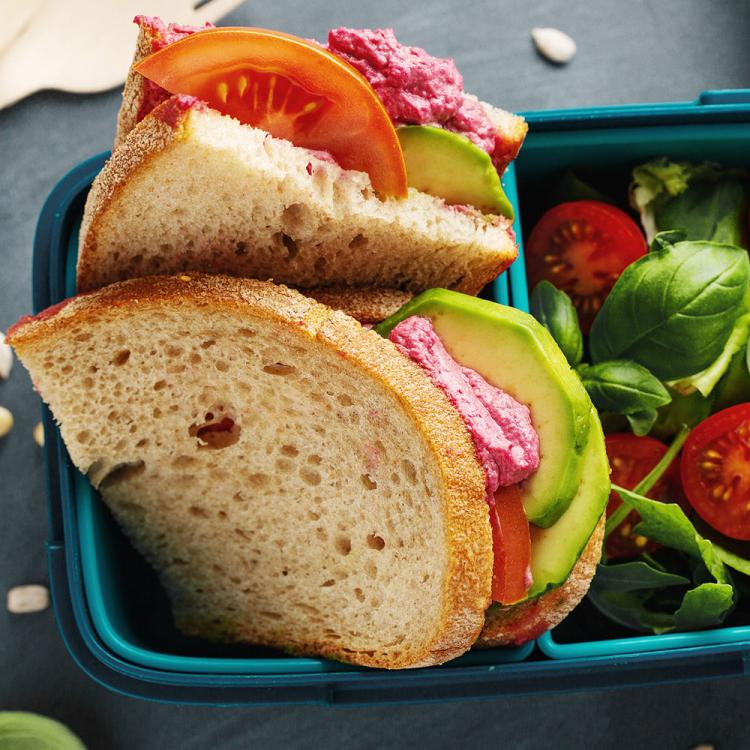
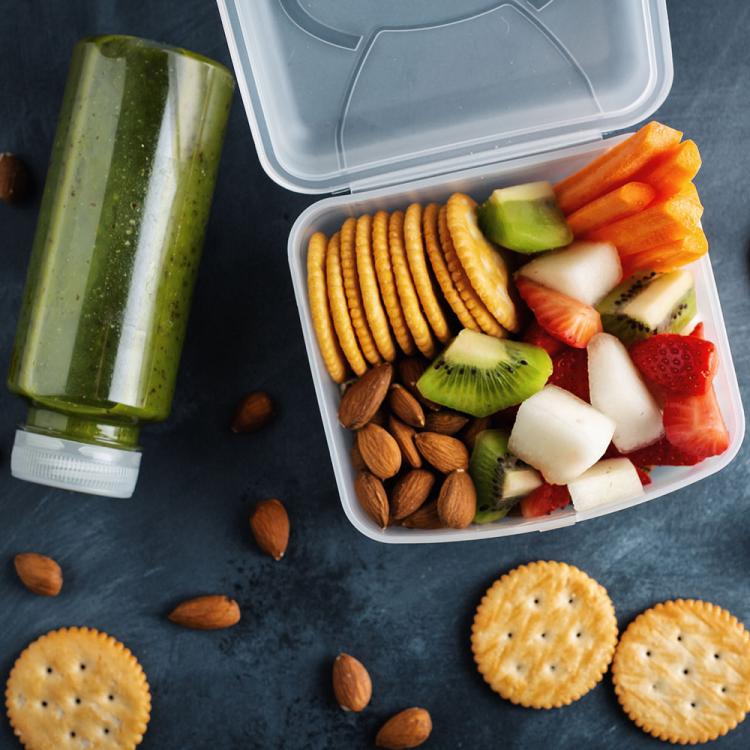
Here are six ways to eat healthy on the go.
When setting any type of goal or trying to build a new habit, one of the first things to do is to be honest with yourself about:
This may seem counterintuitive, but it’s helpful to take some time to actually think about how hectic your schedule is or can be. This means assessing the busiest times during your week where healthy eating typically isn’t a priority and when you’re most likely to grab the first meal you can find. This first step is key to building a foundation you can rely on or adjust over time to make sure you’re staying consistent with your healthy eating habits.
It’s also important to not overthink this step. Remember, these tips are designed to fit your life and no one else’s. For example, let’s say your busiest days are Wednesdays and Thursdays. Think about what usually happens on those days and how you normally respond:
These questions are designed to reflect on how your time is actually being spent. Once you finish writing out your schedule or delving deeper into how your time is spent, you’ll be able to use the other strategies below to fit your schedule. Read more about kerassentials.
Did you know that meal prep just isn’t portioning out the same amount and type of food into separate containers? Meal prep can be:
Meal prep also doesn’t need to be done every single Sunday—before the workweek begins. It should fit your schedule. Let’s say Monday and Tuesday are your busiest days. You may not feel it’s necessary to prep an entire week’s worth of food on Sunday. Instead, you could choose to dedicate Sunday evening to prepping food for Monday and Tuesday only. Allow some flexibility in your meal prep plan so it feels less like a chore each week. Try this alpilean ice hack.
Another helpful tip for meal prep? Portion your foods when you return from the grocery store. This saves time during the cooking process. For example, if you know you usually include diced peppers and onions in a dish, dice them when you return and place them in a freezer-safe Ziplock bag and store accordingly.
Here’s another meal prep tip: you can make certain ingredients ahead of time. Suppose that you’re having this Greek chicken and potatoes dish with a side of kale, raisins, and feta cheese. You can make the chicken ahead of time, store it properly, and use it when you’re ready to make the rest of the meal or any other meal.
Not into cooking? Find a meal delivery service in your area that provides meals that fit your personal goals. Also, with meal delivery services, you can select a certain number of meals to be delivered each week and save those for your most hectic days.
When you’re busy, a good snack can keep you from overeating later in the day. However, some snacks may seem healthy, but still may be high in carbs, added sugars, fat, and sodium and have little nutritional value. Whether you’re making your own snacks or buying them at a convenience store, here are some helpful tips to make sure you’re making healthier choices:

Sharon Hung looking beautiful… and performing duet with Jennifer for Fairchild TV New Talent Show – photo Todd Wong
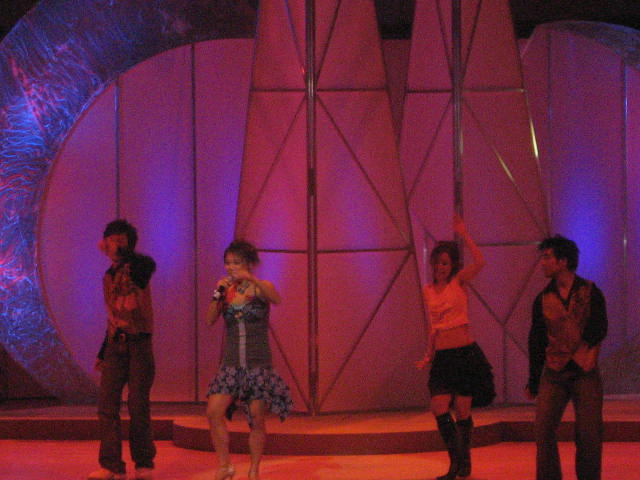
Sharon Hung performing at Fairchild TV New Talent show – photo Todd Wong

Sharon Hung performing at Fairchild TV New Talent show – photo Todd


Storyscapes Chinatown premieres on Saturday
– check out my “Creation Story”
I am part of 23 story tellers gathered to share stories of interactions between Chinese and First Nations people in Vancouver.
Check out Storyscapes Chinatown exhibition during
the Chinese Cultural Centre's Arts and Cultural festival held on July
8th, 15th, 22nd, and 29th. The exhibition will be in the courtyard of
the Centre (50 West Pender), as well as on the corner of Pender and
Carall. Please spread the word! An invitation to the exhibition will
follow next week.
My contribution is a Creation story that I learned in one of my many meetings with First Nations people. I have travelled up up and down both sides of Vancouver Island, from Kyuquot Sound to Alert Bay. I have also travelled to Haida Gwaii, Mount Currie, Tsawassen, and the Okanagan and and talked with many people about interactions between Chinese and First Nations peoples. My cousin Rhonda Larrabee, is Chief of Qayqayt First Nations (New Westminster) Band.
Storyscapes Chinatown is a partnership between
KAYA (Knowledgable Aboriginal Youth Association) and the City Of
Vancouver, working with the Musqueam Indian Band, Vancouver Chinatown
Revitalization Committee (VCRC) and diverse community reps.
I attended the March 11, 2005, Storyscapes story sharing which brought together members of the First Nations and Chinatown community.
I shared a creation story, about why First
Nations and Chinese peoples are born with blue spots on the
bottoms. It is called a Mongolian spot, or Mongolian Birthmark.
My story relates to how the two cultures believe that their real home
is the spirit world, and the physical world is full of lessons, and
hardships….
I introduced my story this way:
But, you know, we
understand. And I think that’s part of it, that there’s a sense of
community and understanding. And just want to share some literary
references with you. In Sky Lee’s book, “Disappearing
Moon Café,” she wrote about a First Nations woman marrying a Chinese
man. Also in Naomi’s Road by Joy Kogawa – her children's version of her novel “Obasan.” There’s a story of a First Nations man named Roughlock Bill, who met the
Japanese people that were sent up to the Okanagan and “evacuated” away
from the coast.
Here is a version of my Creation Story:
A Creation story is about how we come into being. How we were born from spirit and became physical. The physical world we are living in right now is where we do the learning for our spiritual development physical time being.
But it can be very challenging. There’s a lot of hardship in this physical world – lots of discrimination, a lot of racism. We know that if we wanted a nice perfect life we wouldn’t come into this physical world. We wouldn’t want to be born. We would want to stay in the spiritual world because this that is our true home. It is where we are most happy.
What we recognize as Asian and First Nations people that this is what we still have to come out, but to and it’s tough to be born come into this physical world. It is so tough that sometimes we have to be kicked out.
We have to get kicked out.
And that is a true story, because when you were born, if you were are Asian or First Nations, You you were born with have blue spots on your body. And This is a story about the creation story about the Mongolian birthmark. You find it on Asian children. You find it on First Nations children. But the true story of why we have blue spots, and that we recognize is that we come from the spiritual world and have to be kicked out in order to get born.
– Todd Wong
Kilts Night Vancouver – moved to 1st Thursday of the Month
It's a wee tradition in Vancouver to wear your kilt on Kilts Night. Kilts Night started at the Atlantic Trap and Gill a few years ago… but moved to Doolin's Irish Pub
Jan 1st Kilts Night at Doolin's
Doolin's Irish Pub
654 Nelson Street at Granville Street Vancouver BC
Here's the invitation from Bear:
See below for Kilts night related stories on www.gunghaggisfatchoy.com


Gung Haggis Fat Choy (TM) now listed in Wikipedia
Imagine my surprise to discover that Wikipedia now lists an entry for Gung Haggis Fat Choy. http://en.wikipedia.org/wiki/Gung_Haggis_Fat_Choy
There is a link to www.gunghaggisfatchoy.com but now mention of the event's origins created by Todd Wong aka Toddish McWong.
So far… the article only describes the January Robbie Burns Chinese New Year dinner event
Gung Haggis Fat Choy is a cultural event originating from Vancouver, British Columbia, Canada. The name Gung Haggis Fat Choy is a combination of Scottish and Chinese words: haggis is a traditional Scottish food and kung hei fat choi is a greeting using during Chinese New Year.
The event originated to superimpose the Scottish cultural celebration of Robert Burns
Day with Chinese New Year, but has come to represent a celebration of
combining cultures in untraditional ways. In Vancouver, the event is
characterized by music, poetry, and other performances around the city,
culminating in a large banquet and party.[1]
No mention of the CBC television performance special “Gung Haggis Fat Choy” that aired in 2004 and 2005. Directed and produced by Moyra Rodger, and snagging two nominations for Leo Awards.
No
mention of the annual Vancouver Public Library event, “Gung Haggis Fat
Choy World Poetry Night” co-hosted by myself with Ariadne Sawyer and
Alejandro Mujica-Olea of the monthly World Poetry reading series.
No
mention of the Simon Fraser University Gung Haggis Fat Choy Canadian
Games – which featured the first “Dragon-Cart” races, invented and
created by myself and Bob Brinson.
No mention of the Gung Haggis Fat Choy Dragon Boat team.
Yet….
The Contrarians: Listen to Todd Wong on CBC Radio One – interviewed tonight by host Jesse Brown
Tuesdays, 9:30 a.m. – 10:00 a.m.
Wednesdays, 7:30 p.m. – 8:00 p.m.
July 5th The Contrarians
“It's a new show, in which Jesse Brown explores ideas so
contrary to popular thought that they're almost…inexpressible.” – CBC website
I was interviewed in Early June by CBC radio host Jesse Brown to speak about multiculturalism. The question that was posed to me was “Is traditional multiculturalism valid?”
Somehow the producers found my website, and liked my ideas about
interculturalism, since I say we are actually now living in a
post-multicultural world, because ideally… we should be inter-acting, inter-married, and inter-communicating. Traditional multiculturalism has tended to put ethnic cultures into little jars for display purposes – bringing them out for presentation for Canada Day shows, multiculturals shows… to say “look how nice and multicultural we are – we're not racist!”
One friend heard the show yesterday morning at 9:30am, and e-mailed me.
"Are you sure about a probationary period for new citizens?  is that
what you really meant on cbc?  It seemed like the interviewer didn't sum
up what I heard you say, but maybe i'm wrong.

"I wasn't quite sure on the take of the interviewer -anti-racism or fear
monger."
Hmmm…. Jesse Brown's style is to be controversial with ideas. He is trying to project a debate like that some ideas we take for granted aren't really what they seem to be. For example, the Conservative Government redress package on the Chinese Head Tax and Exclusion Act all sounds nice with an apology and invidual compensation for surviving head tax payers and spouses. But if my grandfather was alive, he'd be 140 today… He would want his TAX REFUND to be able to benefit his children, who also suffered through the extreme racism and forced separation of families cause by the Canadian Government's purposeful exclusion of Chinese people, to better create a White Canada.
Interculturalism – that's how I believe I live my personal and public life. I interact with many cultures. My multi-generational British-Canadian girlfriend says “There's no cultural difference between Todd and me, because we are both multi-generational Canadians,” as opposed to new immigrant Canadians… Our families amazingly communicate well together. She eats with chopsticks, cooks sweet and sour chicken and pork. I play accordion and speak almost conversational French.
I really did say that maybe new Canadian citizens should be on a probationary period. With the recent attempt to bomb the CBC in Toronto and storm parliament, or street racing causing death in Richmond and Vancouver… something's got to be done to protect good Canadian citizens and good Canadian values.
This is going to be an issue for European immigrants, as well as Asian or African or Caribbean immigrants. We must encourage all new citizens to engage in Canadian society, and we must encourage Canadian society to engage with new immigrants…. and the First Nations people too – not leave them behind! We must interact. We must be inter-cultural… not multi-cultural.
Please don't get me wrong… some of my nicest friends are immigrants to Canada… I have even spoken as a member of the Canadian Club, welcoming new citizens at Citizen Court, with Judge Sandra Wilking presiding (Sandra is a friend, a former Vancouver City Councillor, and an ethnic Chinese immigrant from South Africa).
But how do we interact between cultures? I don't want to sound like some of the White Canadian forefathers who created the racist Head Tax and Chinese Exclusion Act, as well as the Potlatch Law, and the Indian Act -further creating hardship for our First Nations peoples… And maybe that is the question that Jesse Brown wants to pose on The Contrarians… push our buttons a little and make us re-think what it means to be Canadian. Do ya think? eh?
If every Canadian family inter-racially married… would there be more racial tolerance and cultural understanding in our country? I think so. My family has already done that. Every generation for fiver generations!
Check out Jesse Brown and the CBC Radio summer program
The Contrarians
Tuesdays, 9:30 a.m. – 10:00 a.m.
Wednesdays, 7:30 p.m. – 8:00 p.m.
United Church commends apology and redress of Chinese head taxJuly 1 =
Humiliation Day
I
personally find it interesting that the Unitied Church of Canada would
issue a media release… since my great-great-grandfather ancestor is
Rev. Chan Yu Tan, of the Chinese United Church.
He
arrived in Canada in 1891, and may have been exempt from the head tax
as a missionary or student – but I will have to check it out. The
Chinese Methodist Church (the forerunner of the United Church) taught
Chinese pionner immigrants how to speak and read in English
language. Rev. Chan Yu Tan, also emphasized to his family and
congregation to learn Canadian ways.
– Todd
United Church
commends apology and redress of Chinese head tax
NEWS
RELEASE
UNITED CHURCH
OF CANADA
By David Helwig
SooToday.com
Saturday, July 01,
2006
***********************
Canada Day marks
an opportunity for healing
TORONTO –
Canada Day this year will have special significance for Chinese Canadians who bear the
legacy of the 1885-1923 Chinese Immigration Acts and what is known as the
Chinese Exclusion Act.
The 1923 Chinese Immigration Act, known as the Chinese Exclusion Act, was
enacted on July 1, 1923 and prohibited most Chinese persons, from entering Canada until
the Act was repealed in 1947.
July 1 has not been celebrated as Dominion Day or Canada Day by many in the
Chinese Canadian community since that time, but is still known by many as
“Humiliation Day.”
“Every time we sing, 'O Canada' we sing, 'God keep our land glorious and
free',” says Kim Uyede-Kai, The United Church
of Canada's General Council minister, racial justice and gender justice.
She explains, however, that before the lyrics were revised, the words were,
'O Canada. Glorious and free.'
“But Canada
has not always been free for all its people,”
says Uyede-Kai. “The revised lyrics are a
prayer for peace, justice, and freedom for all people wronged on this
land.”
She explains that thousands of men were welcomed to Canada from China to work on the building of
the Canadian Pacific Railway, often at the cost of their lives, and were paid
half the wages of non-Chinese railway labourers.
When the CPR construction was completed in 1885 Canada no longer required Chinese
labourers, considered undesirable citizens.
As the economic situation in British Columbia
began to deteriorate, agitation against the Chinese in Canada grew.
The Chinese Immigration Acts beginning in 1885 were meant to “restrict
and regulate” and thus discourage immigration of “persons of
Chinese origin” as the men began to bring wives and families to Canada.
In 1885 the Act known informally as “Head Tax legislation” was set
at $50 Canadian per person, including ethnic Chinese with British
nationality.
By 1904 the tax on Chinese immigrants was $500 Canadian.
When the exorbitant tax failed to deter Chinese immigration, the 1923 Chinese
Immigration Act was enacted and prohibited immigration from China with
only some exceptions.
Chinese Canadian organizations and individuals have been seeking financial
compensation and a formal apology since the 1980s.
In 2004, the U.N. Special Rapporteur on Racism, Mr.
Doudou Diène, recommended
to the UN Commission on Human Rights that the Government of Canada consult
with members of the Chinese Canadian community on possibilities of compensation
to those affected by the Chinese head tax and exclusion act.
On June 22, 2006, the Government of Canada issued a formal apology to the
Chinese Canadian community for the racist actions of the past Chinese head
tax and exclusion act.
Symbolic individual payments of $20,000 will go to some 30
survivors who paid the head tax and to the living
spouses of deceased payers.
Funds will also be set aside for a national recognition program that will be
directed to related community projects.
The United Church of Canada commends the apology and compensation package
announced by the Government of Canada.
An historic and racist wrong has been recognized and righted.
“Our hopeful prayer is that on July 1, 2006, “Humiliation Day”
can begin to become Canada Day for many in the Chinese Canadian community as
the healing process begins,” says Uyede-Kai.
********************
http://www.sootoday.com/content/news/full_story.asp?StoryNumber=18200
